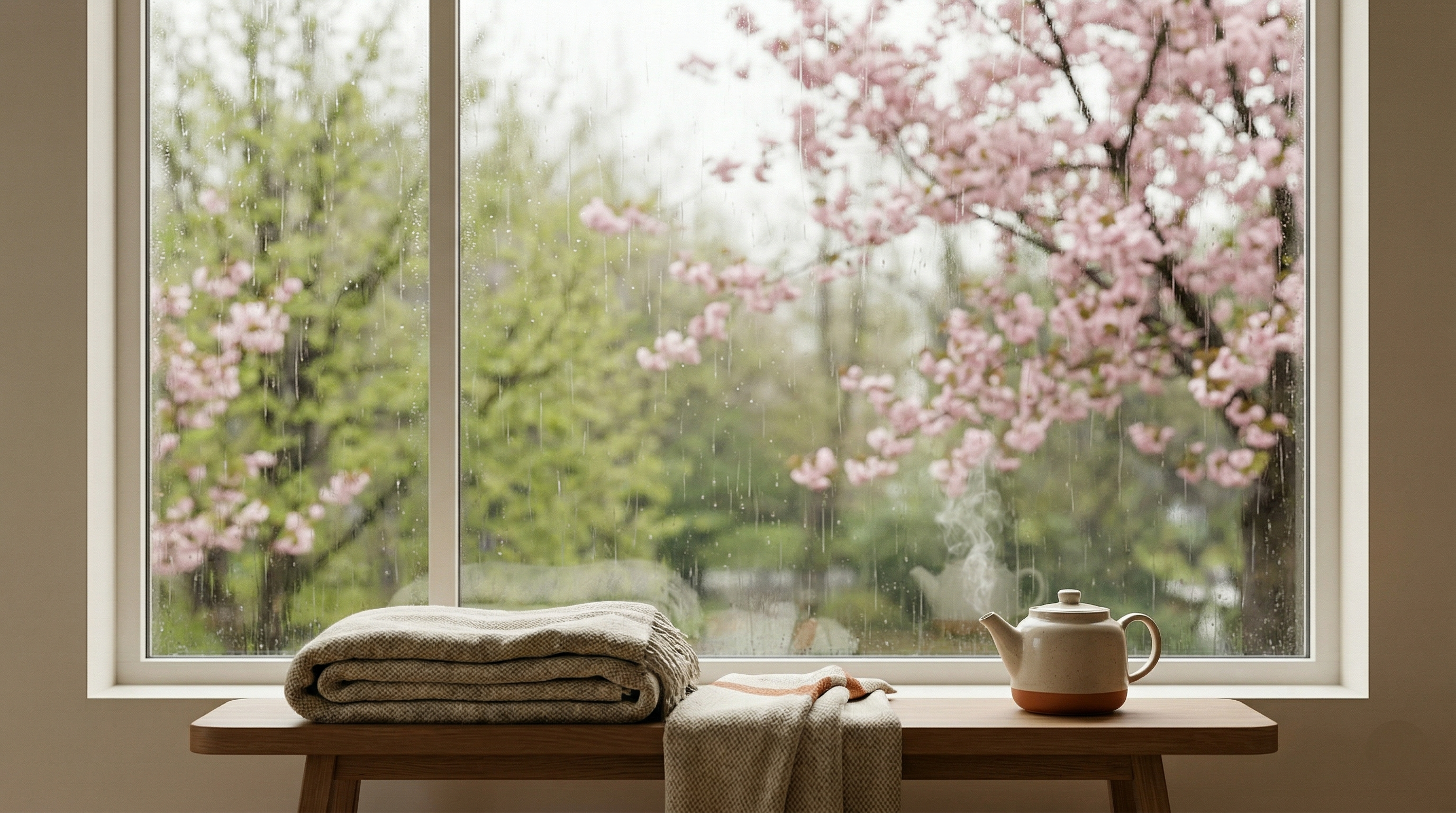
There's something about a rainy spring afternoon that practically begs you to slow down. The patter on the windows, a warm cup of tea, maybe a blanket over your lap — and a puzzle book in your hands. I've been designing word search puzzles for years now, and I can tell you that spring is when my readers really settle into a rhythm. The season itself feels like permission to exhale.
But here's the thing about spring rain: it catches you off guard. One moment you're planning a garden walk, and the next you're staring out at a downpour wondering what to do with yourself. That's exactly when spring word search puzzles become your best companion — no charging required, no login needed, just you, a pencil, and a grid full of hidden words waiting to be found.
Why Spring Is the Perfect Season for Word Search Puzzles
Spring has a unique energy. It's not the sluggish hibernation of winter or the overscheduled frenzy of summer. It's a transitional season — a time when your brain starts waking up, craving gentle stimulation after months of cold-weather routine.
I always tell my readers that seasonal puzzles hit differently than generic ones. When you're searching for words like blossom, rainfall, meadow, and butterfly, you're not just solving a puzzle — you're immersing yourself in the feeling of the season. It engages a different part of your brain than a random list of unrelated words ever could. (I wrote more about this in my article on why themed puzzles make all the difference.)
That's exactly why I created Spring Word Search — a paperback packed with 100 spring-themed puzzles, each featuring 24 words on a 20x20 grid. It's designed for exactly these afternoons: not too easy, not overwhelming, just the right level of satisfying challenge. And at $9.99, it's less than a fancy coffee drink and lasts a whole lot longer.
One thing I've noticed is that people tend to underestimate how much a seasonal theme can change their puzzle experience. It's the difference between eating a plain cracker and eating one with your favorite cheese on it. Same activity, completely different enjoyment.
The Quiet Joy of Screen-Free Rainy Day Activities
I don't need to tell you that screens are everywhere. You already know. What I will say is that on a rainy afternoon, when the world outside gets quiet, reaching for your phone out of habit can actually make you feel more restless, not less.
Puzzle books offer something screens can't: a sense of completion without the scroll. You find a word, you circle it, you move on to the next. There's a tangible beginning and end. If you're curious about why this matters so much for stress, I wrote a whole piece on screen-free activities for stress relief that covers the research.
Spring word search puzzles are especially good for this because they carry a built-in mood. The vocabulary is warm and hopeful — think renewal, garden, sunshine, robin. Even on a gray, drizzly day, you're mentally surrounded by the best parts of the season.
I keep a copy of my Spring Word Search book on the side table next to my reading chair. It's become as much a part of my spring routine as switching to lighter blankets.
Building a Rainy Day Puzzle Collection That Lasts
Here's something I get asked a lot: "Hazel, I finish puzzle books too fast. What do I do?"
First of all, I love that problem. Second, I have solutions.
If you've already worked through a seasonal book and want to keep going on those rainy afternoons, I recommend branching out to one of my larger-format collections. 2000 Unique Words (Green) gives you 50 puzzles with 40 words each on a 25x25 grid — a noticeable step up in challenge and duration. It's $7.99 in paperback, and the green cover happens to look perfect sitting on a spring-themed coffee table. (I didn't plan that, but I'm not complaining.)
For those who want even more variety, 2000+ Unique Words (Red) offers the same generous format — 50 puzzles, 40 words per puzzle, 25x25 grids — at the same $7.99 price point. Between the two books, you've got 100 puzzles with over 4,000 unique words to find. That's a lot of rainy afternoons covered.
What I love about these larger-grid books is how they change the pace. A 20x20 grid with 24 words gives you a satisfying 15-to-20-minute session. A 25x25 grid with 40 words? That's a proper afternoon activity. You can really sink into it, lose track of time in the best possible way.
And if you're building a collection — or thinking about gifts — take a look at my roundup of word search books under $10. Every book I mentioned above falls into that range, which means you can stock up without guilt.
How Spring Word Search Puzzles Support Your Mental Wellness
I'm careful about making grand claims, but I will share what I hear from my readers constantly: puzzles make them feel calmer. More grounded. More present.
There's research to back this up, too. Studies from institutions like the University of Exeter have found that people who regularly engage in word puzzles show measurable benefits in attention and short-term memory function. The act of scanning a grid, holding letter patterns in your mind, and filtering out distractions — that's genuine cognitive exercise wrapped in something that feels like leisure.
Spring is a natural time to invest in mental wellness. The season already encourages renewal and fresh starts. Adding a puzzle habit to your rainy-day routine is one of the simplest, most accessible ways to care for your brain while genuinely enjoying yourself.
I've also found that puzzles pair beautifully with other calming spring rituals. A pot of chamomile tea. The sound of rain. A candle that smells like fresh linen. These small pleasures stack on top of each other until you've created an afternoon that actually restores you instead of just passing the time.
Making the Most of Your Spring Puzzle Sessions
A few practical tips from someone who's been doing this for a long time:
Use a pencil, not a pen. I know pen feels more decisive, but pencil lets you erase if you accidentally circle the wrong letters — and it's gentler on your hand during longer sessions.
Don't rush. The point isn't speed. The point is presence. If you want to spend forty-five minutes on one puzzle, that's not slow — that's luxurious.
Keep your book in a dedicated spot. If your puzzle book lives on your nightstand or your favorite chair's armrest, you'll reach for it instinctively when the rain starts. If it's buried in a drawer, you'll reach for your phone instead.
Try different grid sizes. The Spring Word Search book uses a 20x20 grid, which is great for moderate sessions. The 2000 Unique Words books use 25x25 grids, which are perfect when you want to go deeper. Mixing grid sizes throughout the week keeps things interesting.
And honestly? Let yourself enjoy the simple pleasure of circling a word. There's no prize, no leaderboard, no algorithm tracking your performance. It's just you and the puzzle. That's the whole point.
Frequently Asked Questions
Are spring word search puzzles only for the spring season?
Not at all! While the vocabulary in spring-themed puzzles revolves around seasonal words like flowers, weather, and renewal, plenty of people enjoy them year-round. The themes are uplifting regardless of the month. That said, there's something especially satisfying about solving a spring puzzle while it's actually raining outside your window in April.
What's the difference between a 20x20 grid and a 25x25 grid word search?
A 20x20 grid with 24 words (like my Spring Word Search) offers a moderate challenge that most adults can complete in 15–20 minutes. A 25x25 grid with 40 words (like the 2000 Unique Words series) is larger and more complex, typically taking 30–45 minutes. The bigger grid means more letters to scan and more words hidden in trickier directions. Both are enjoyable — it just depends on how much time you have and how deep you want to go.
Can word search puzzles really help with relaxation and stress?
Yes — and the evidence goes beyond anecdotal. Research from institutions like the University of Exeter has linked regular word puzzle engagement to improved cognitive function and reduced stress markers. The focused, repetitive scanning involved in word search activates a flow state similar to meditation. Many of my readers describe their puzzle time as the calmest part of their day.
Spring doesn't last forever, and neither do rainy afternoons. But the calm, focused feeling you get from sitting with a good puzzle book? That stays with you.
If you'd like to try a few spring-themed puzzles before committing to a full book, I've put together a free sample pack just for my readers. Head over to yourdreampress.com/bonus/ to grab yours — no strings attached, just puzzles.
Happy solving, and enjoy the rain. ☔
— Hazel
Enjoy puzzles? Get 80 free ones.
Join the Hazel Woods email list for free printable word search puzzles, new book announcements, and exclusive giveaways.
Claim Free Puzzles